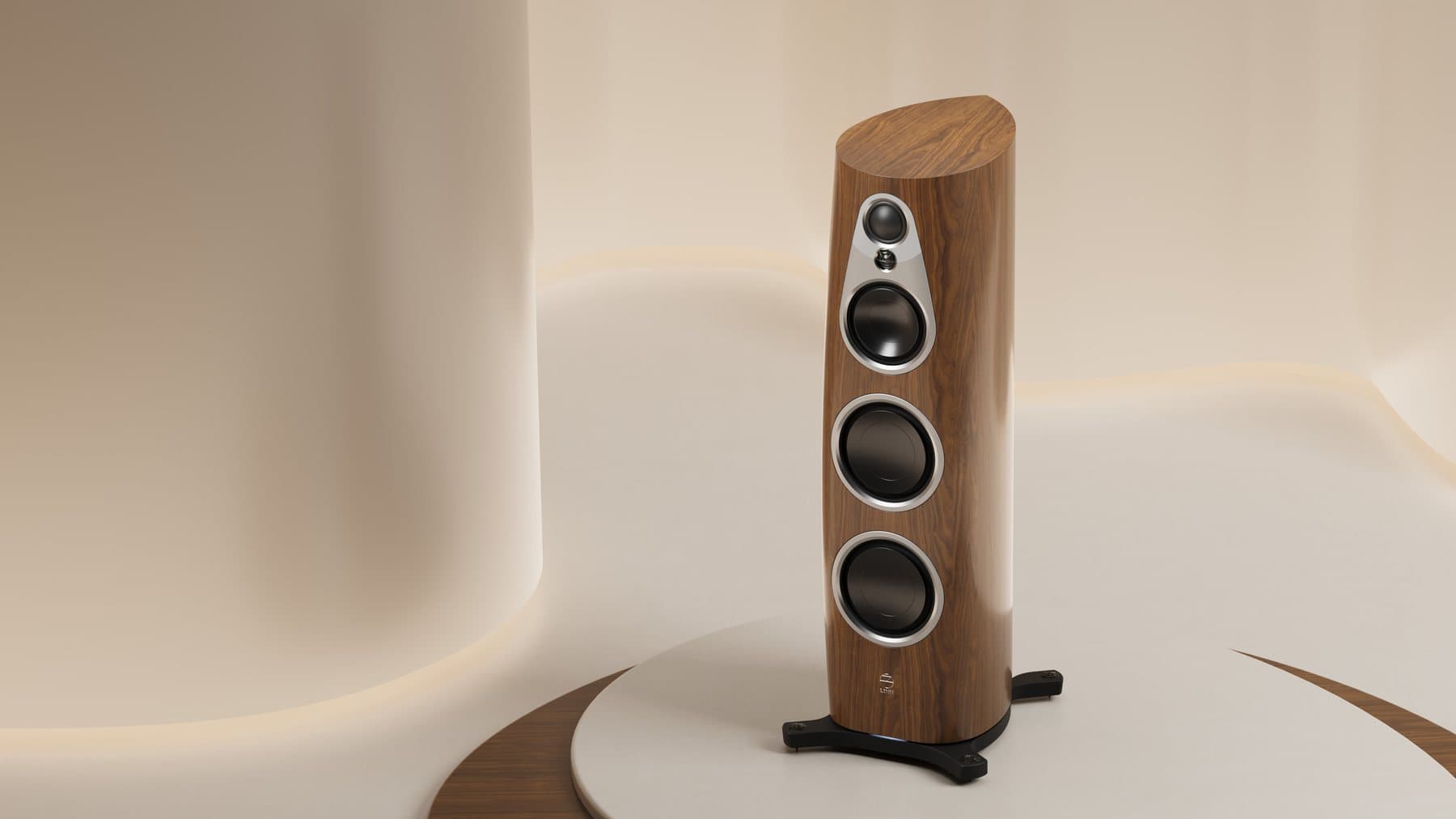
Pistonik: The First Drive Units Linn Has Ever Built
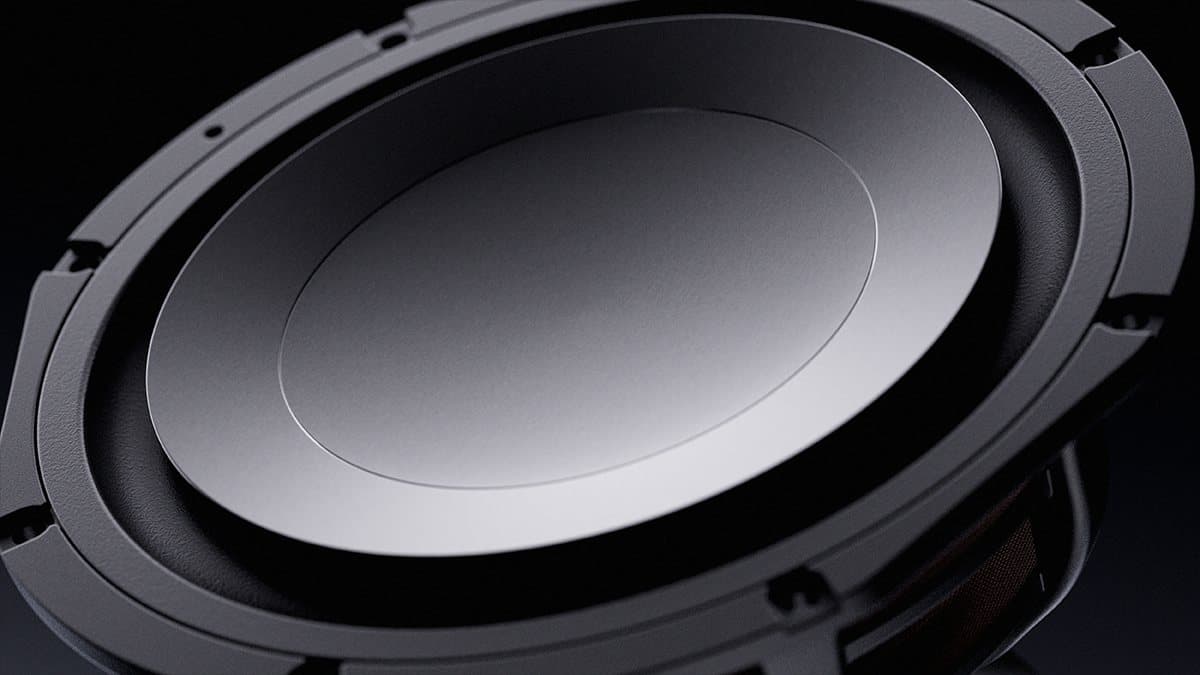
After fifty years of designing loudspeakers around other people's drive units, Linn has built its own. Pistonik is a 6-inch upper bass and an 8-inch woofer engineered around a single idea — the same force on the cone, everywhere in its travel.
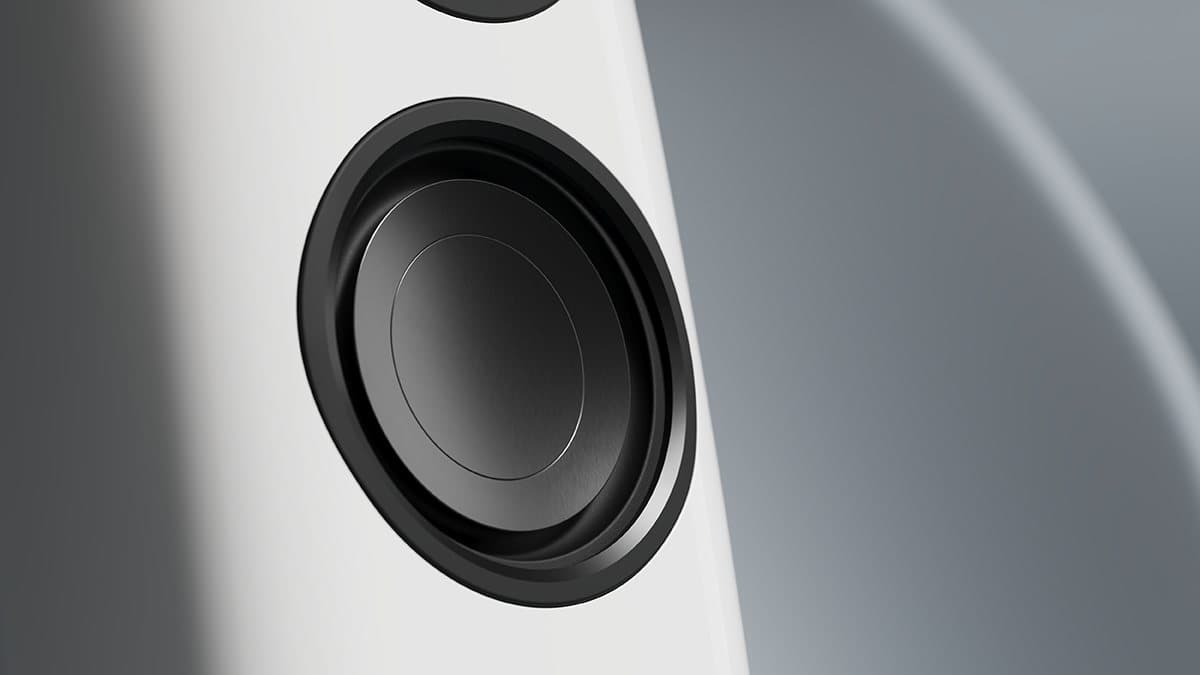
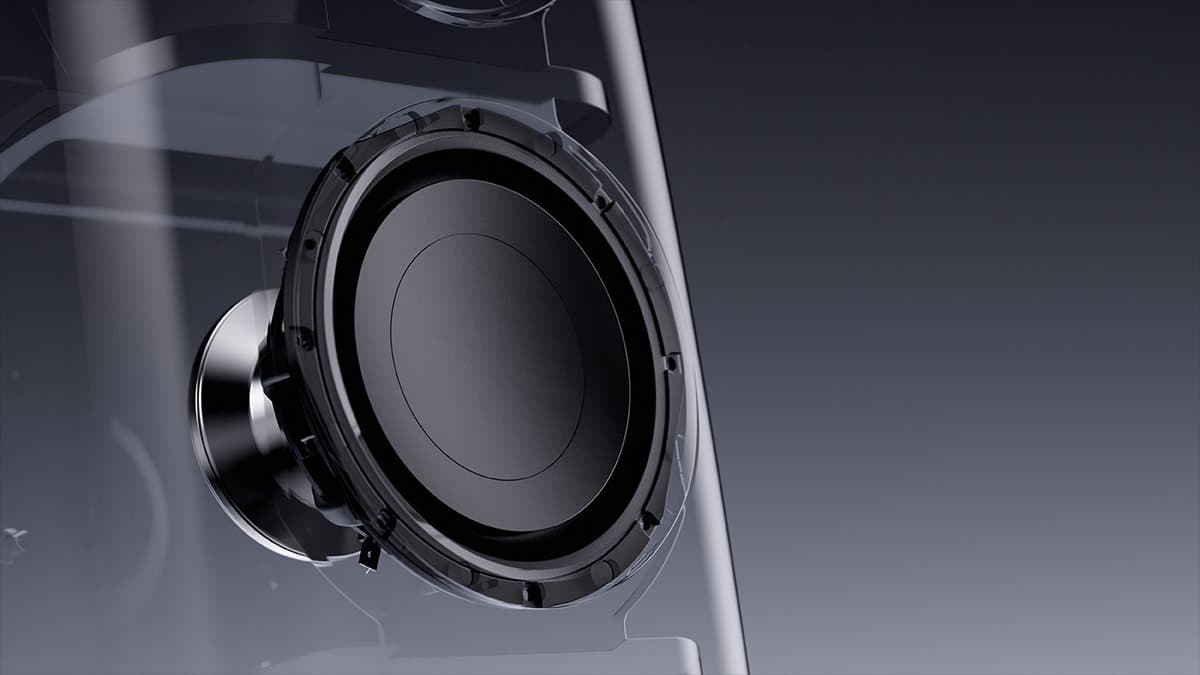
Linn has been designing loudspeakers since the 1970s, but until this year it had never made the one part that does the actual work. Drive units came from outside suppliers, chosen and matched but not designed in Glasgow. Pistonik changes that: a 6-inch upper bass and an 8-inch woofer, developed in-house, and the first drive units Linn can claim as entirely its own.
The brief was narrow, which is usually the sign of a good one. A loudspeaker cone should feel exactly the same push at the far end of its travel as it does at rest. Almost no drive unit manages this: as the coil moves out of the magnetic field the force falls away, the suspension stiffens unevenly, the air trapped behind the cone pushes back, and the coil heats up until it is no longer the component the designer specified. Every one of those effects is distortion, and every one of them gets worse exactly when the music gets interesting. Pistonik attacks all four.
A field that refuses to move
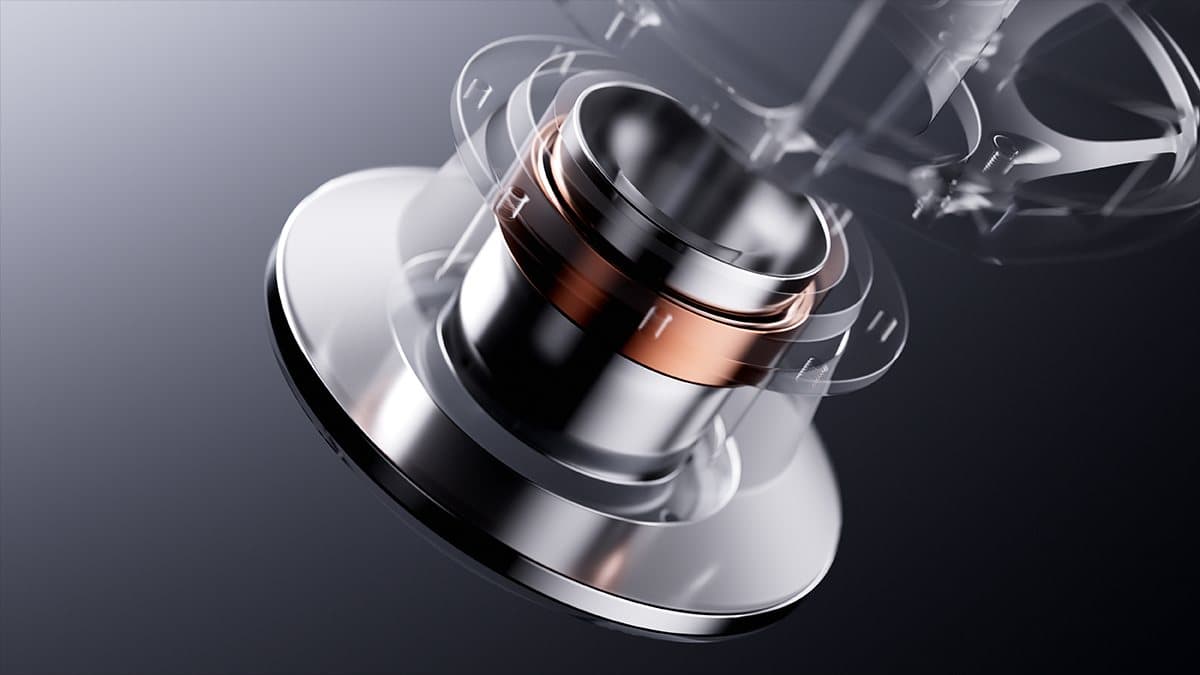
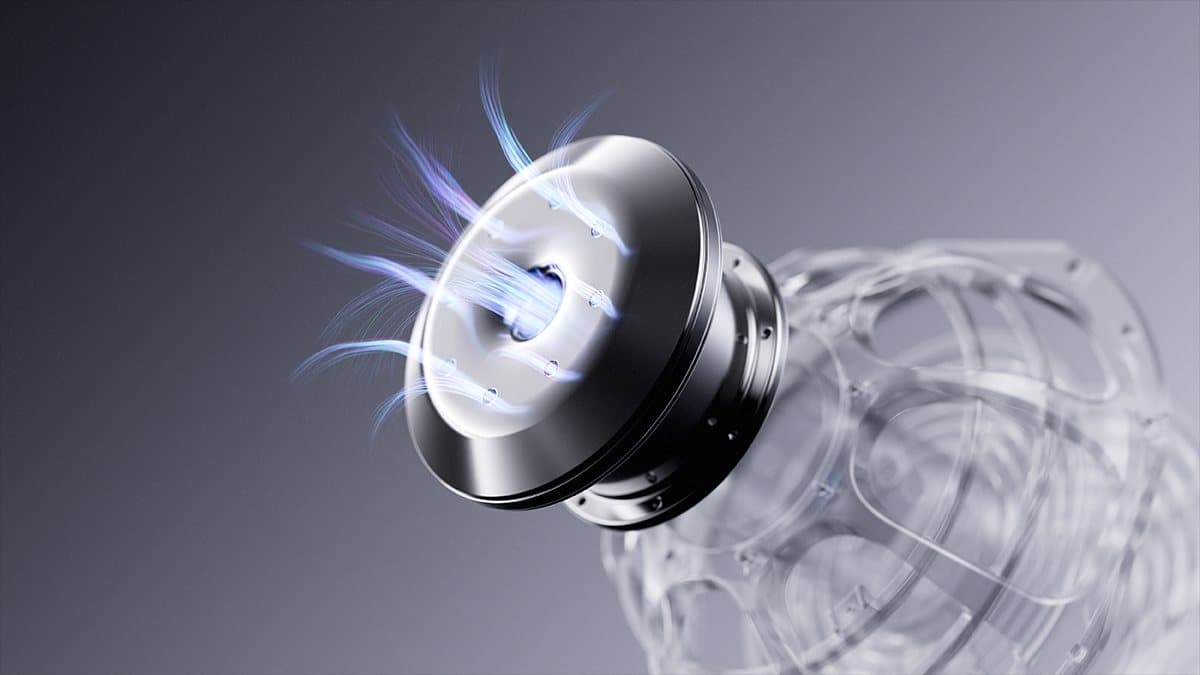
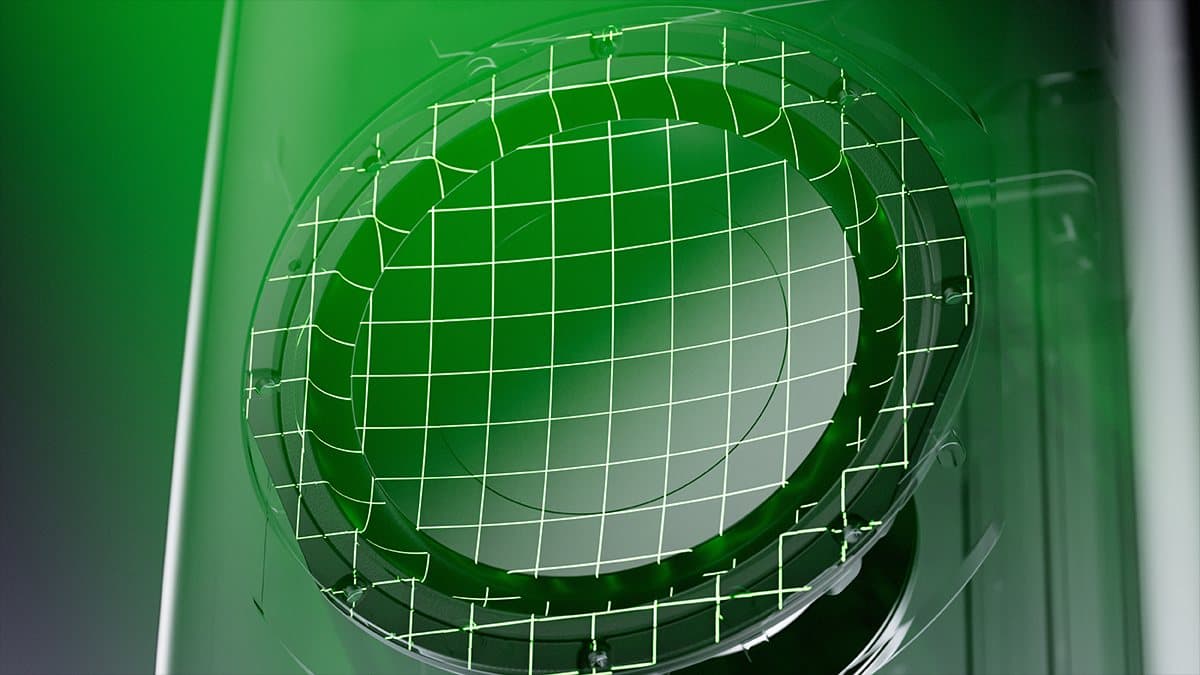
In a conventional motor the voice coil's own current bends the magnetic field it sits in, so the force on the cone changes with the signal itself. Pistonik holds the magnetic circuit in permanent saturation — the field is already at its limit before any music arrives, so the coil cannot modulate it. An extended magnet gap keeps the coil fully immersed across the whole of a long stroke, and conductive rings around the pole hold inductance steady so the top end of the bass stays clean.
Nothing left to compress
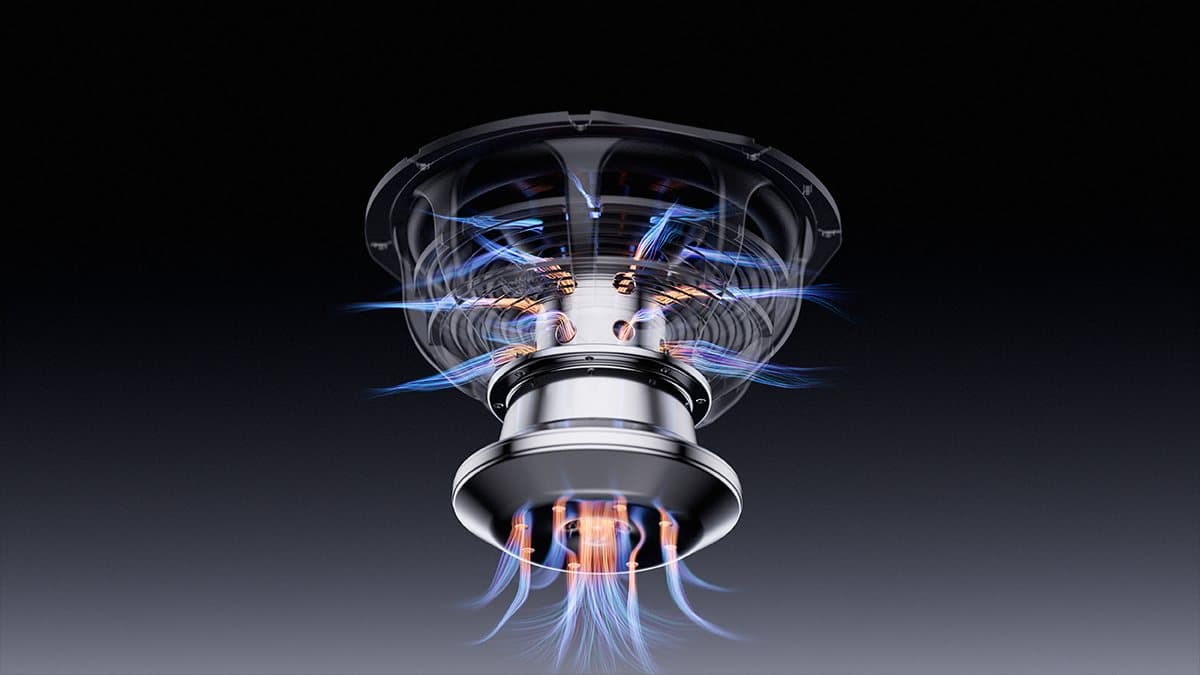
Every pocket of trapped air behind a moving cone is a spring the motor has to fight, and it stiffens the harder the driver is pushed. Pistonik vents in three layers — through the pole, through the former and through the chassis — with cross-sections modelled so the air never chuffs, even at full excursion. The stiffest of those springs is the pocket behind the dust cap, which a wide central vent clears completely. The cone then tracks the input rather than the air behind it, which is why dynamics survive the loud passages instead of quietly flattening.
Heat is distortion you can hear
A hot voice coil is a higher-resistance voice coil: sensitivity drops, bass thins, and the music compresses without ever sounding obviously wrong. The ventilation that removes the air spring doubles as a cooling circuit — the cone's own movement pumps air directly across the windings on every cycle, and metal paths carry away what is left into the magnet assembly and the cast chassis. The intent is simple enough to test at home: hour three of a loud session should sound like hour one.
The suspension follows the motor
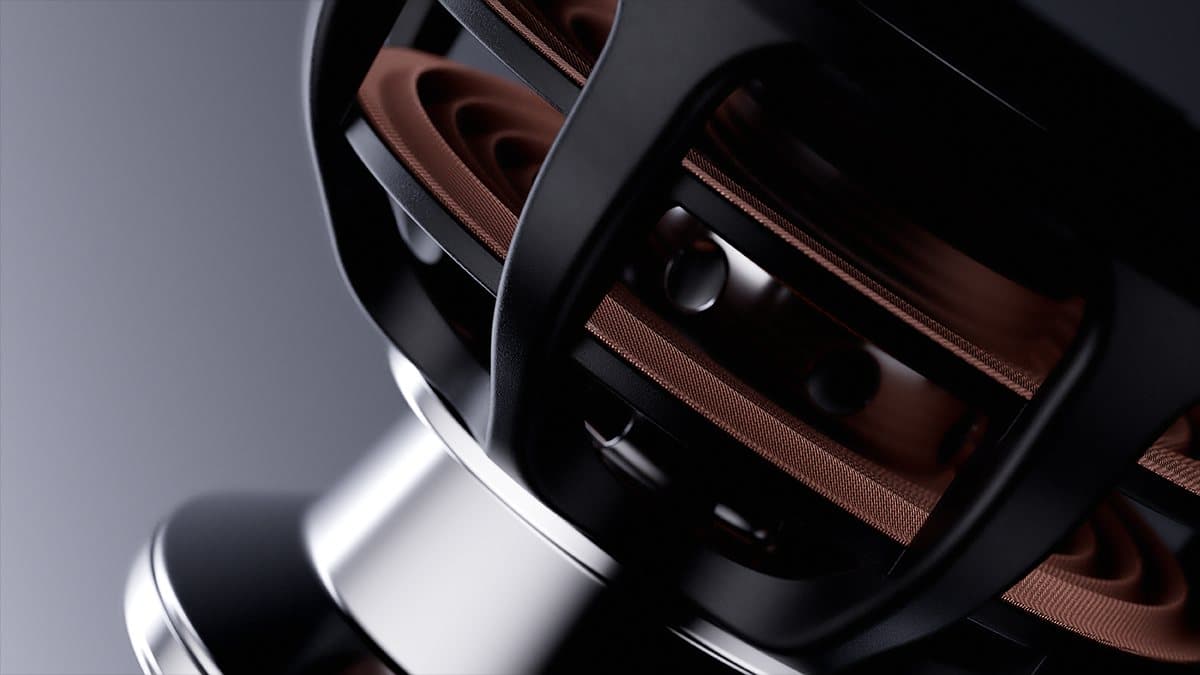
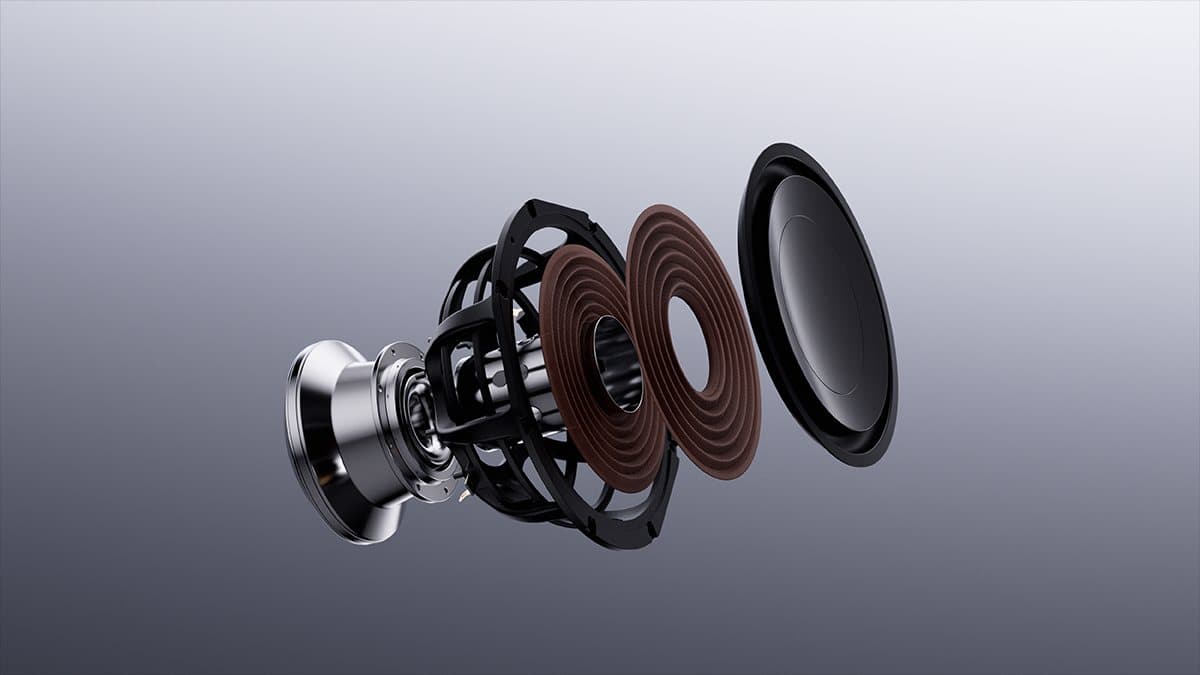
A linear motor is only half the answer. If the surround and spider are not equally even, they put the non-linearity straight back. Both are bespoke to this drive unit and were simulated before they were ever tooled: stiffness holds flat across the working stroke and then rises hard at the last possible moment, and the cone is restrained identically in both directions so it never adds a thump of its own.
Two sizes, one architecture
The 6-inch upper bass and the 8-inch woofer share the same motor architecture and each get their own cast chassis, so the two hand over to one another without a change of character — the thing that usually gives away a multi-driver cabinet. The diaphragm is hard aluminium, rigid and optimally coupled so its resonant modes sit well above the passband and cone breakup never enters the music.
Then every unit is laser-measured individually and given its own Exakt profile by serial number, corrected to within a sixteenth of a decibel of reference. It is a very Linn way to finish the job: build the most linear driver you can, then measure each one and correct what is left in the digital domain.
What it measures
- Force factor Bl(x) stays flat across the full stroke — the motor pushes as hard at the extremes as it does at rest, where a typical drive unit has already lost most of its force
- Suspension stiffness Kms(x) holds constant, then rises symmetrically at the limit — control right up to maximum excursion
- Every unit laser-measured and corrected by Exakt to within 0.0625 dB of reference
An upgrade, not a replacement
This is the part we like most. Every Linn 360 built before April 2026 can have its 6-inch upper bass and 8-inch woofer replaced with the Pistonik units — two people, about two hours, carried out in your own listening room. The loudspeakers do not travel and the cabinet you own is the cabinet you keep, bespoke finishes included. From now on the drivers are fitted to every new 360, so an upgraded pair and a new pair perform identically.
Hearing it
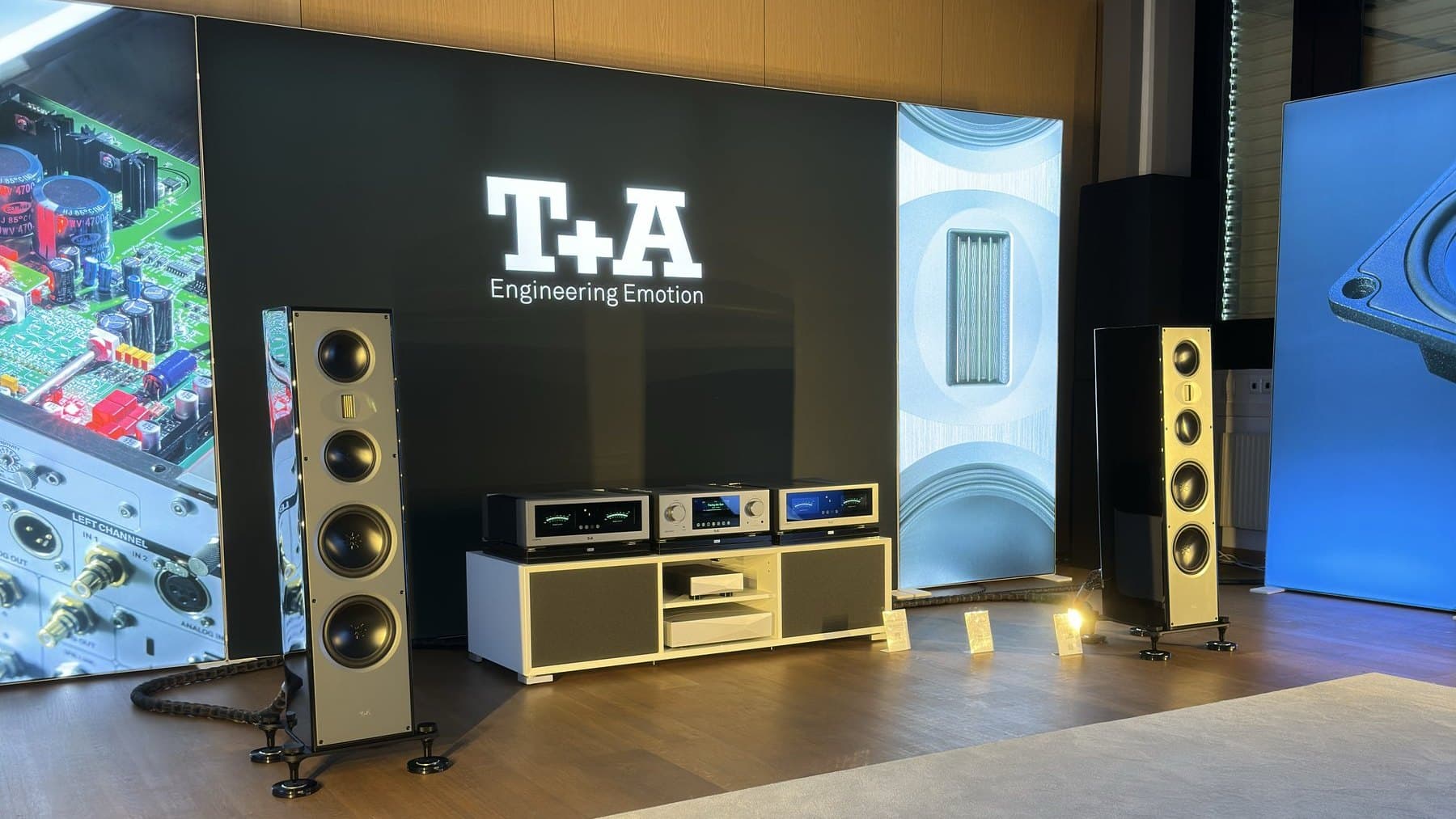
Linn demonstrated Pistonik at HIGH END Vienna in June, driving a pair of 360s with Klimax Solo 800 monoblocs — a deliberate pairing, because a drive unit this linear exposes whatever is driving it. If you own 360s and are curious whether the upgrade is worth it, that is a question best answered on a recording you already know well. Get in touch and we will arrange it.