Two Wrongs Never Made a Right: Klimax Solo and the 360
A high-end system usually pairs an amplifier that shades the signal one way with a loudspeaker that shades it another, and hopes the two errors cancel. Klimax Solo takes the amplifier out of that equation — and the 360 is the loudspeaker it was made to drive.
There is a habit in high-end audio that nobody quite says out loud. An amplifier colours the signal one way, a loudspeaker colours it another, and the system is assembled in the hope that the two errors will cancel somewhere in the room. Sometimes it works. It works for one recording, at one volume, on one evening — and then you change something and the balance you carefully built comes apart.
Klimax Solo is Linn's answer to that: the same output into any load, at any volume, at any temperature, for the life of the product. 0.0004% THD+N at 1 kHz. 0.01Ω of output impedance. Two models, one engineering brief, and a loudspeaker at the other end that was designed to the same standard.
Twenty-five years of one idea
- 1999 — Klimax Solo. The first Klimax component; it stayed in the range for twenty-five years
- 2024 — Klimax Solo 800. The successor: sixteen output devices, a 2 kW supply, and no fan anywhere
- 2025 — Klimax Solo 500. The same engineering in a chassis 88.5 mm high and 10.6 kg in weight
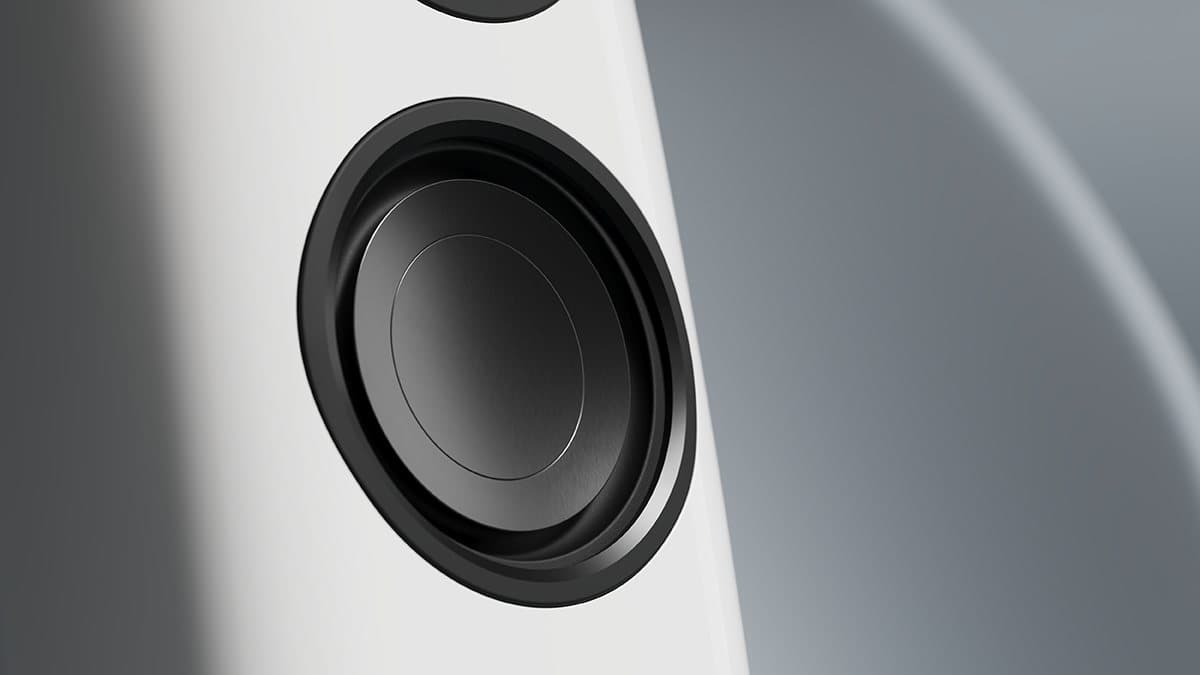
- 2026 — Pistonik. Linn's first in-house drive units — a load that finally shows what an amplifier is doing
Choose by the room, not by the standard
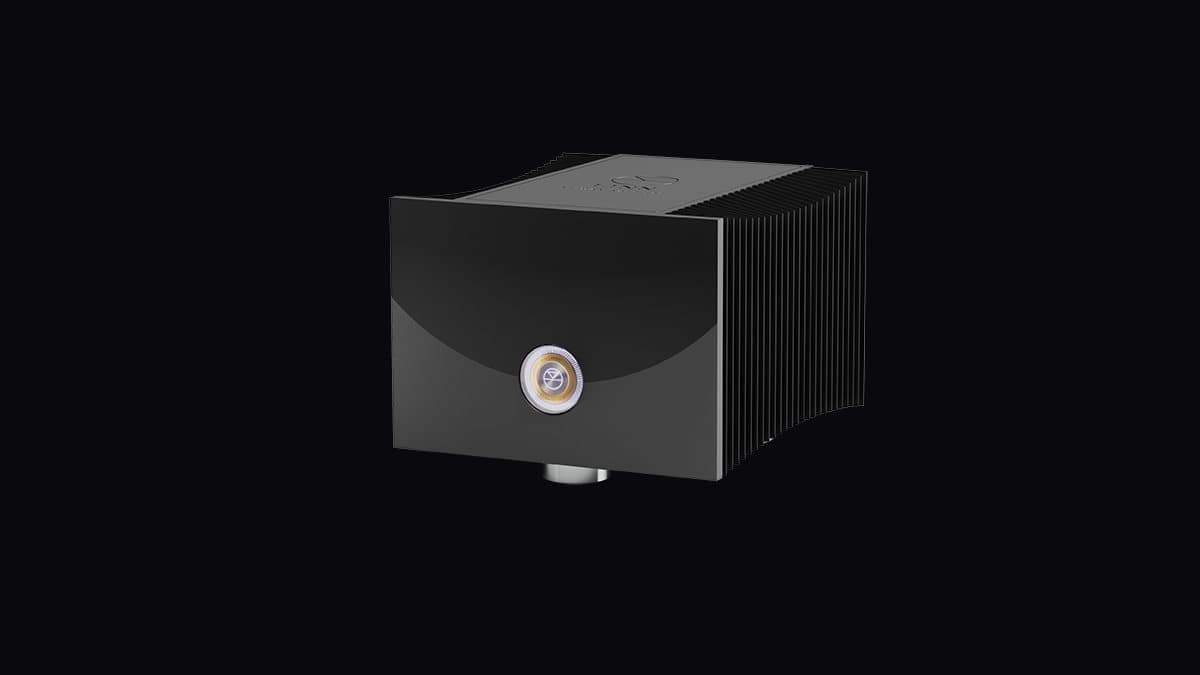
Both are single-channel Class AB monoblocks running the same technologies, and both measure to the same distortion and output impedance figures. The difference is power in reserve, not quality of engineering — which is a genuinely unusual thing to be able to say about two models at different prices.
Solo 500 delivers 250 W into 8Ω and 500 W into 4Ω from a chassis under 90 mm high — a drop-in upgrade for original Solo owners and the natural choice where space is at a premium. Solo 800 delivers 400 W into 8Ω, 800 W into 4Ω and 1.2 kW into 2Ω: Linn's reference amplifier, with current in hand to hold the most difficult loudspeaker loads in check at any level.

A bias that never drifts
Every Class AB amplifier has a bias sweet spot where crossover distortion falls away. Conventionally it is set once, by hand, on a bench — and from that moment it wanders with temperature, age and use. Adaptive Bias Control samples the current through each output transistor continuously; an FPGA calculates the correct bias and a control loop holds it there. Every transistor is corrected individually, so tolerance between devices stops being something you can hear, and each Solo behaves like every other Solo — which is what keeps a stereo pair balanced for the life of the products.
Power that holds
Linn uses a precision-regulated switch-mode supply rather than a large linear one: more efficient, better isolated, quieter. A resonant circuit drops the voltage across each switch to zero before it is thrown, so the supply stays whisper-quiet across its operating range, and the rails hold their voltage through dramatic loading changes — if the mains varies, the output does not. Solo 800 carries 2 kW in reserve; Solo 500 uses auto-voltage rails, generating only the power the music actually calls for.
Control is what you hear
A loudspeaker is a moving mass on a spring. Once in motion it generates its own current, and an amplifier with a high output impedance simply follows it around. Solo 800 runs sixteen output transistors — eight pairs in parallel — which divides output impedance by eight and gives the amplifier authority over difficult loads. Performance holds across the band and right up to the rating: the amplifier gets more composed as the level rises, not less. Sixteen devices sharing the work also run cooler than a handful working hard, which matters now and in twenty years.
Hour three should sound like hour one
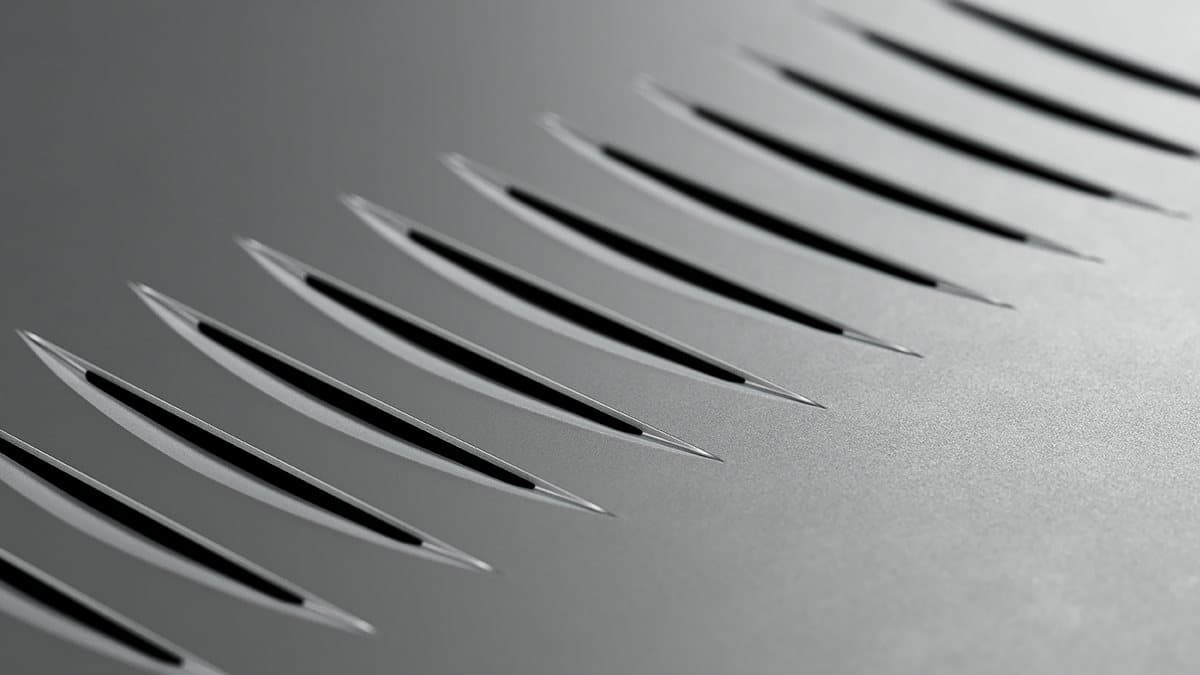
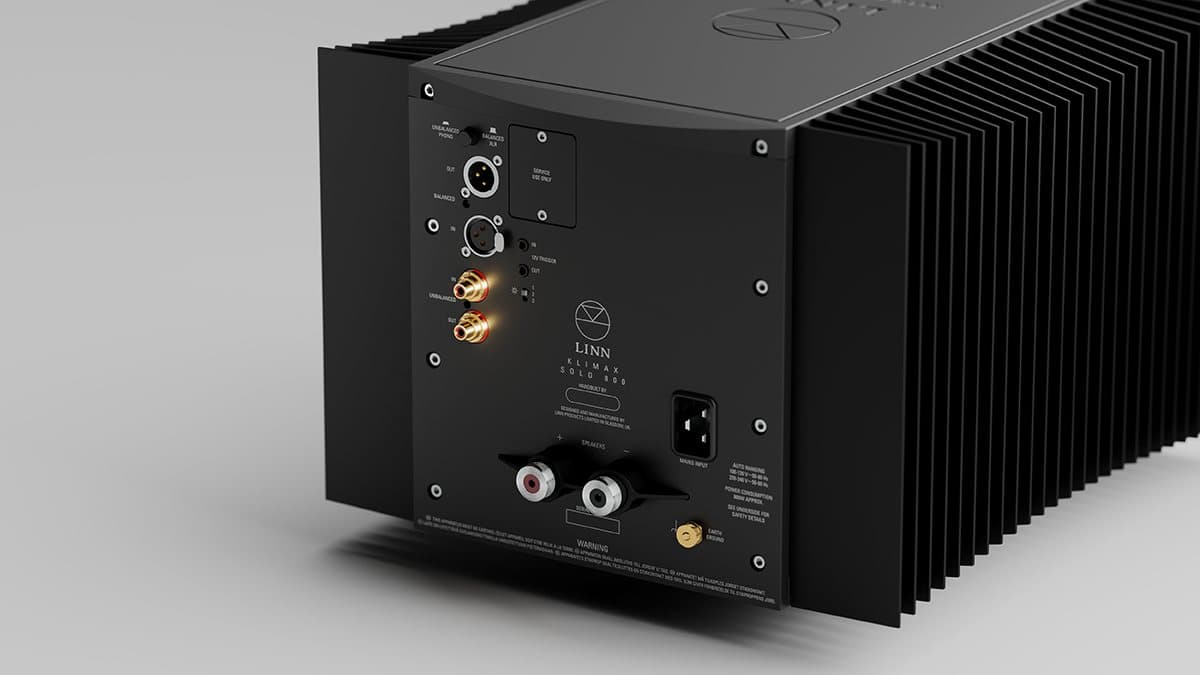
Heat changes components, and changed components change the sound. Both amplifiers hold their temperature through a long, loud session, by different routes. Solo 800 has no fan anywhere: circuitry mounts straight onto large heatsinks and convection draws air through hidden lower vents and out of the slim vent on top — nothing to hear, and nothing to fail. Solo 500 uses a machined fin labyrinth that radiates through the gills; pushed hard, two fans take over at a speed an FPGA sets from both temperature and the incoming signal.

The numbers, and why they matter
- 0.0004% THD+N at 1 kHz into 8Ω — around 100× lower than a comparable competitor amplifier, at every load
- 0.01Ω output impedance at 1 kHz, on both models
- Distortion trends downwards as the volume rises, where the competitor's curve is already climbing
- Solo 500 measures roughly 85× lower than the original Klimax Solo it replaces
Numbers like these are easy to be cynical about — plenty of amplifiers quote a good figure at one frequency into one load. What is unusual here is that the three Linn traces for 8Ω, 4Ω and 2Ω sit almost on top of each other. Halving the impedance barely changes the result, which is the measured version of the claim at the top of this piece: the same output into any load.
The system it was made for
360 Passive with Aktiv Bass keeps Power DAC amplification for the lower bass inside the cabinet and leaves the 360 Array to amplification of your choosing. Put a Klimax Solo on each loudspeaker and the chain reads: Klimax DSM for streaming, Organik DAC and Space Optimisation; two Klimax Solo monoblocks driving the Arrays; 360 PWAB handling its own lower bass from within. The ultimate version replaces the crossover entirely — 360 PWAB with a Klimax Exaktbox and six channels of Solo, one amplifier per drive unit.
This is also where Pistonik earns its keep. A drive unit that linear exposes whatever drives it, and these amplifiers were measured to the same standard as the drivers. Adaptive Bias Control keeps the two monoblocks behaving identically, so the stereo image stays where the recording put it, and 0.01Ω with a supply that refuses to sag means peaks arrive intact rather than rounded off.
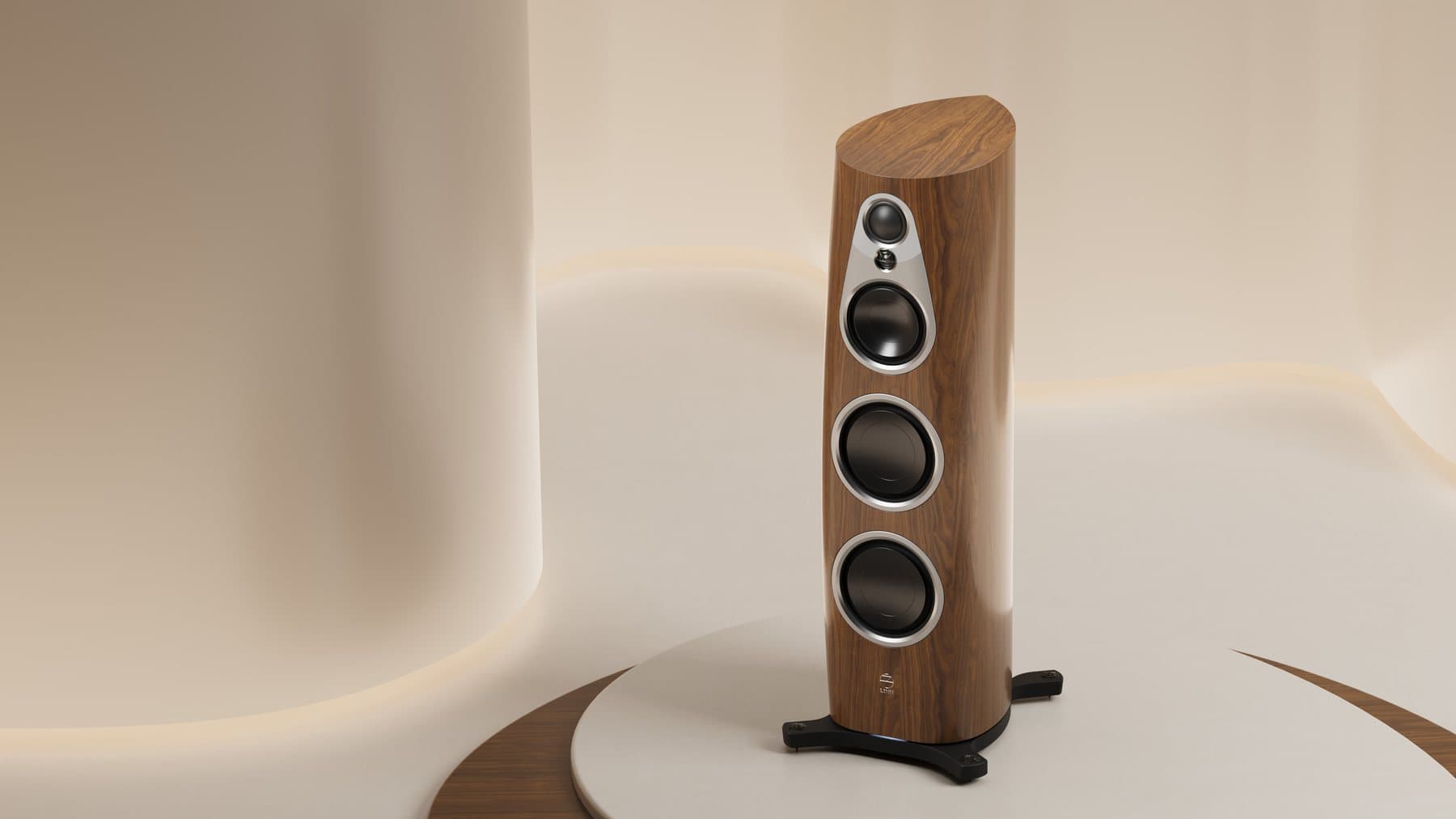
A new classic: 360 in Walnut
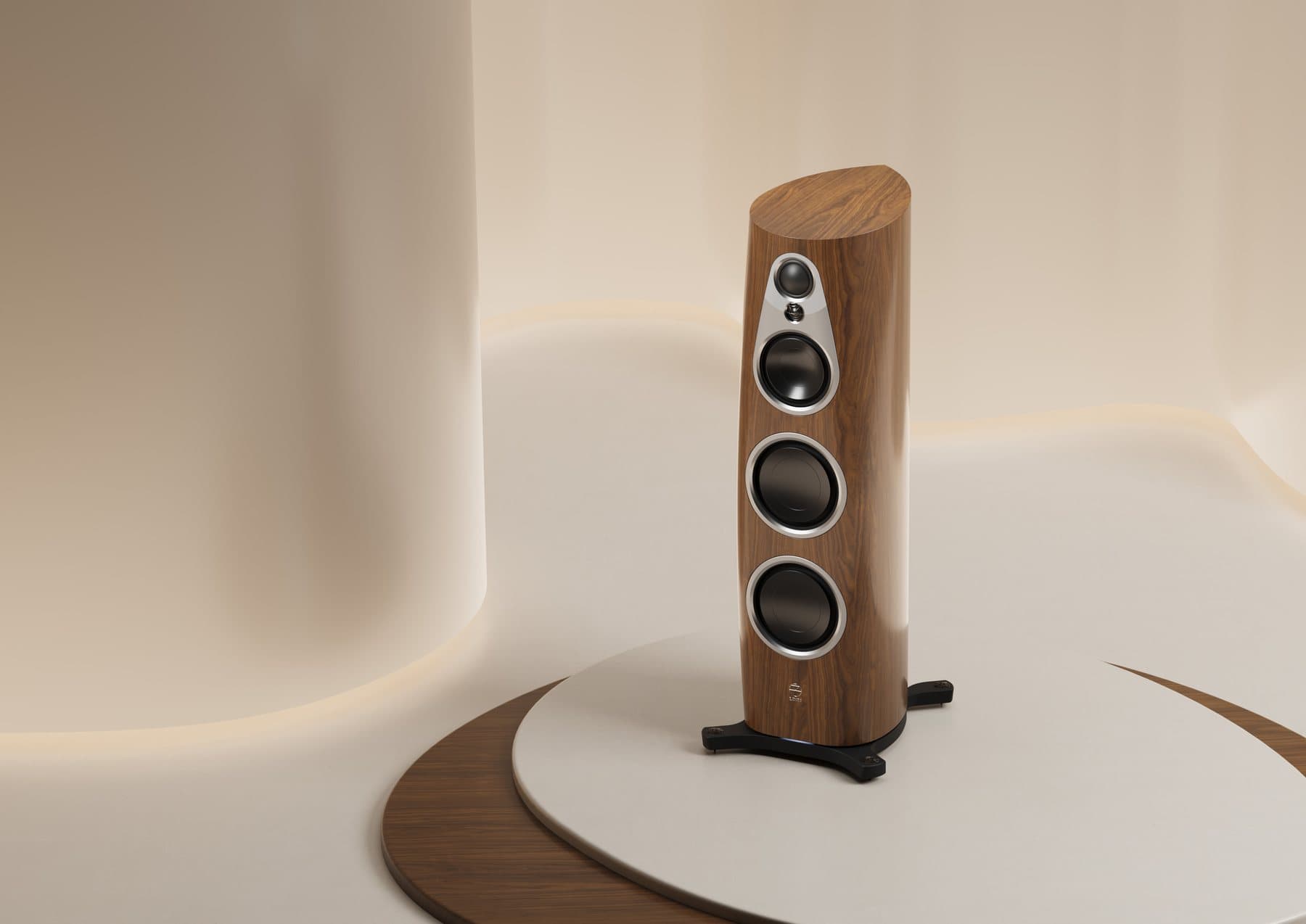
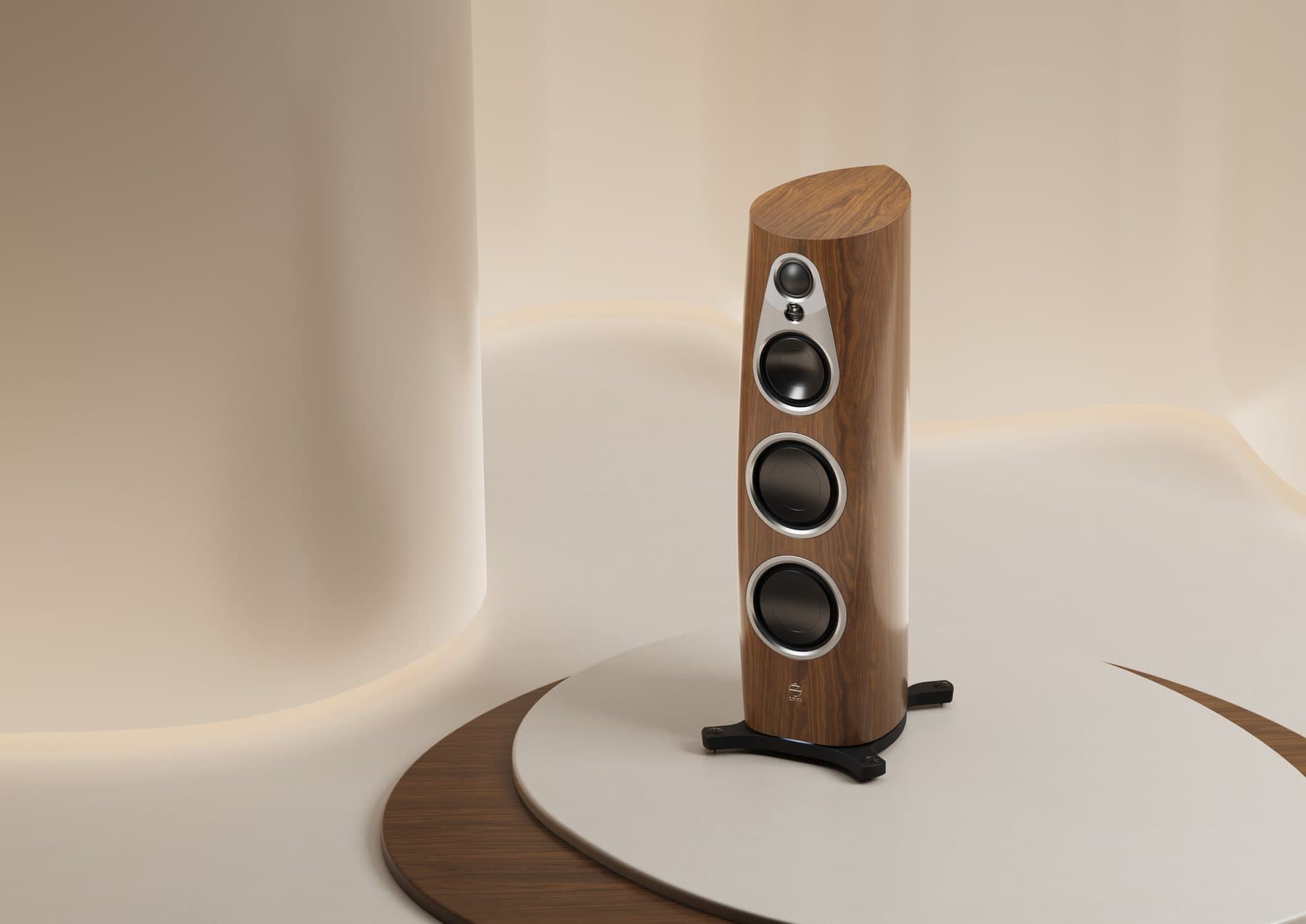
Arriving alongside the first Linn-designed drive units is a walnut cabinet finish for the 360 Classic Collection — warm and figured, for rooms where a gloss cabinet would announce itself. Walnut is a natural veneer, so no two cabinets are quite alike, and the machined trim comes in black or silver; the two read quite differently in person. It is available across the 360 range, in Exakt Integrated and in Passive with Aktiv Bass alike.
Some things decide themselves in the room
Trim, finish, model and position are not page decisions. They are twenty minutes in front of the loudspeakers with something you know well — and Space Optimisation corrects for where the loudspeakers actually are in your room, not where they ideally would be. If any of the above is on your list, tell us what you listen to and we will set it up properly.